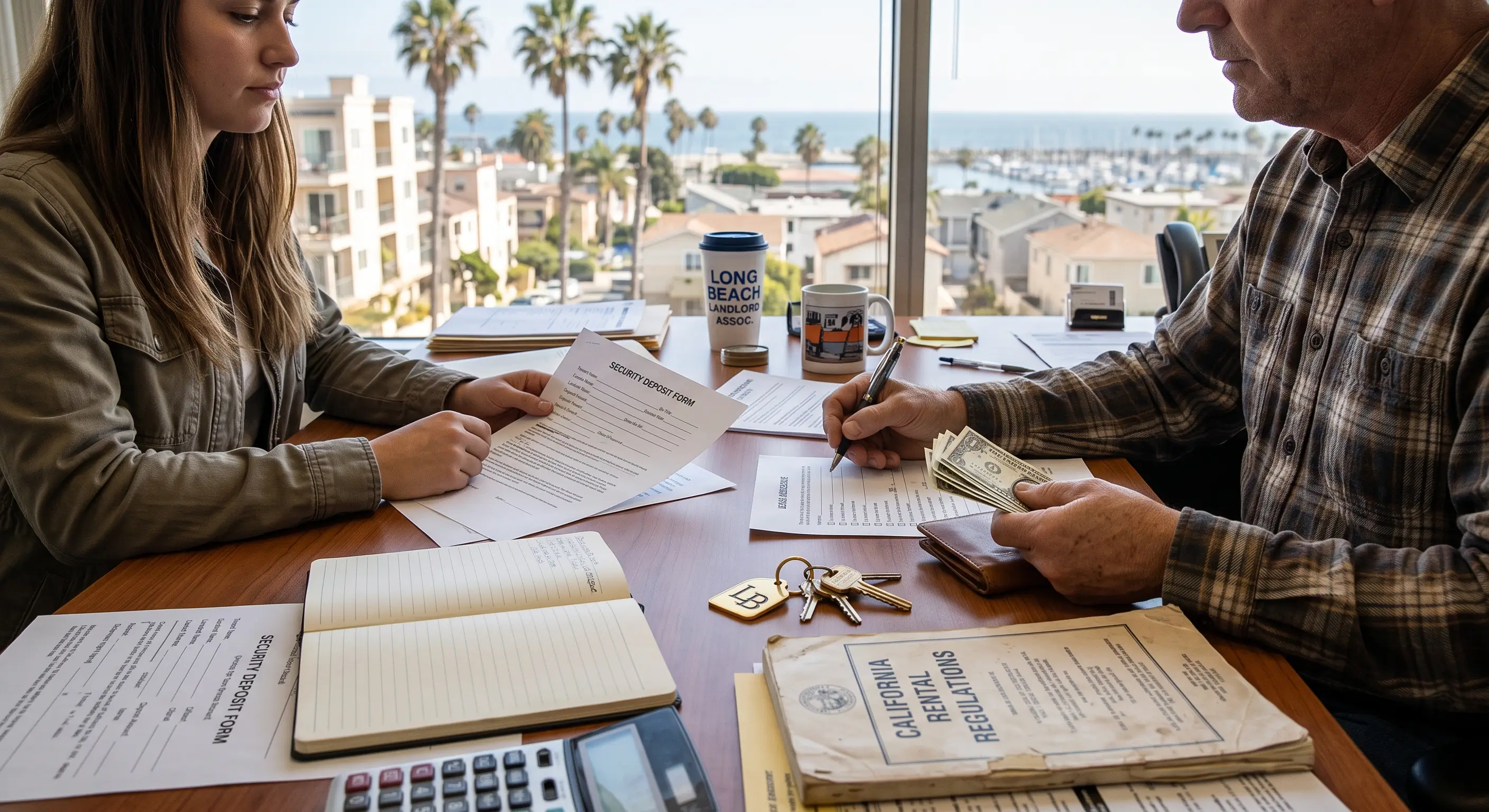
Security deposits are one of the most misunderstood parts of California rental law, and getting the rules wrong can cost landlords far more than the deposit itself. For property owners in Long Beach, staying compliant with state regulations is not optional. Recent changes to California law have tightened the limits on how much landlords can collect and how quickly deposits must be returned once a tenant moves out.
Whether you own a single rental home or manage multiple units, understanding these requirements protects you from disputes, lawsuits, and financial penalties. This guide breaks down what Long Beach landlords need to know about security deposit limits, deductions, and return timelines under current California law.
Key Takeaways
California law now caps most security deposits at one month's rent, with limited exceptions for small landlords.
Landlords must return deposits and provide an itemized statement within 21 days of a tenant moving out.
Deductions are only allowed for unpaid rent, damage beyond normal wear and tear, and cleaning costs tied to a written lease clause.
Bad faith retention of a deposit can result in landlords paying up to twice the deposit amount in damages.
The New Security Deposit Limits
Assembly Bill 12 reshaped how much California landlords can charge for a security deposit. As of July 2024, most landlords are limited to collecting no more than one month's rent as a security deposit, regardless of whether the unit is furnished or unfurnished. This is a significant change from the previous law, which allowed landlords to charge up to two months' rent for unfurnished units and three months for furnished ones.
There is a narrow exception. Small landlords, defined as natural persons who own no more than two residential rental properties with a combined total of four units, may still charge up to two months' rent for an unfurnished unit. However, this exception does not apply if the landlord is a corporation, LLC, or real estate investment trust. Long Beach landlords who fall outside this small landlord definition need to adjust their lease agreements to reflect the new one-month cap.
What Counts as a Valid Deduction
California law is specific about what landlords can and cannot deduct from a security deposit. Allowable deductions include unpaid rent, the cost of repairing damage beyond normal wear and tear, and cleaning expenses necessary to restore the unit to the condition it was in at move-in, provided the lease includes a cleaning fee clause. Normal wear and tear, such as minor scuffs on walls or worn carpet from years of use, cannot be deducted.
Disputes often arise because landlords and tenants disagree on what qualifies as damage versus ordinary use. Keeping the property well maintained throughout the tenancy reduces this risk considerably. Addressing issues quickly through professional property upkeep services helps prevent minor wear from turning into costly damage claims, and it gives landlords clear documentation to support any deductions they do make.
The 21-Day Return Requirement
Once a tenant vacates, California landlords have 21 calendar days to either return the full security deposit or provide an itemized written statement explaining any deductions, along with the remaining balance. This deadline applies regardless of the reason the tenancy ended. If deductions exceed $125, landlords must also include receipts or invoices for the repairs or cleaning performed.
Missing this window, even by a few days, can expose landlords to legal liability. Tenants who believe their deposit was wrongfully withheld can take the matter to small claims court, and if a judge finds the landlord acted in bad faith, the tenant may be awarded up to twice the amount of the deposit in statutory damages, on top of the original deposit itself.
Documentation Protects Landlords and Tenants Alike
The best way to avoid a deposit dispute is thorough documentation from the start of the tenancy to the end. A detailed move-in inspection report, complete with dated photos or video, establishes a clear baseline for the unit's condition. The same process should be repeated at move-out so any changes are easy to identify and justify.
Accurate financial records also play a critical role. Landlords need to track rent payments, deposit amounts, and any deductions in a way that can be easily referenced if a dispute arises. Working with a dedicated property management accounting system keeps these records organized and readily available, which makes it far easier to respond to tenant questions or produce documentation if a case goes to small claims court.
Common Mistakes Long Beach Landlords Make
Several recurring mistakes lead to security deposit disputes in Long Beach. Charging more than the legal limit is one of the most frequent, especially among landlords who have not updated their lease templates since AB 12 took effect. Others fail to send the required itemized statement within 21 days, even when they intend to return the full deposit, which can still trigger tenant complaints.
Another common error is deducting for normal wear and tear, such as fading paint or worn flooring from years of typical use. Landlords should also avoid vague language in their itemized statements. A generic line item like "cleaning" without a receipt or clear explanation is far more likely to be challenged than a detailed breakdown tied to actual invoices.
FAQs
1. How much can a landlord charge for a security deposit in California?
Most landlords can charge up to one month's rent. Small landlords who own two or fewer properties with four or fewer total units may charge up to two months' rent for unfurnished units.
2. Can a landlord charge a separate pet deposit in California?
No. California law does not allow a separate pet deposit on top of the overall security deposit cap. Any pet-related deposit must fit within the one-month limit for most landlords.
3. What happens if a landlord misses the 21-day deadline?
The landlord may lose the right to keep any portion of the deposit and could face statutory damages if the tenant proves the withholding was done in bad faith.
4. Can a tenant use the security deposit as last month's rent?
Generally, tenants cannot apply the deposit toward the last month's rent unless the landlord agrees to it in writing, since deposits are meant to cover damages and unpaid obligations at move-out.
5. Do landlords need to pay interest on security deposits in California?
State law does not require interest on deposits, though some cities have local ordinances that do. Long Beach landlords should check municipal rules in addition to state law.
Partner with Skyline for Stress-Free Compliance
Staying on top of California's security deposit laws takes more than good intentions. It requires accurate recordkeeping, timely communication, and a system that catches details before they become costly mistakes. Skyline Property Management helps Long Beach landlords manage every part of the rental process, from move-in inspections to final deposit accounting, so nothing falls through the cracks.
If you want a partner who understands the ins and outs of California landlord-tenant law and keeps your properties compliant, reach out to Skyline Property Management today to learn how our team can simplify your rental operations.